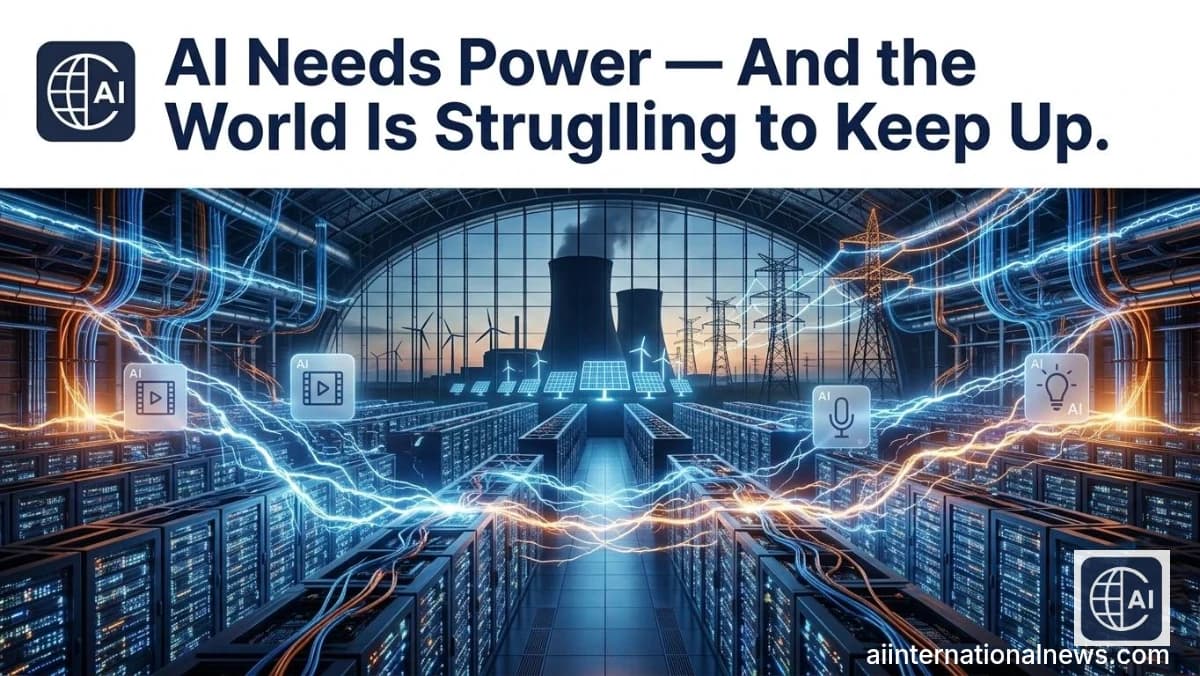
Artificial intelligence is scaling faster than most infrastructure can handle, and energy systems are starting to feel the pressure. As demand for AI models, data processing, and cloud services rises, the electricity required to support this growth is becoming a serious concern for governments and industry leaders.
Recent coverage highlights a growing shift in how policymakers and companies are thinking about power consumption. Instead of treating AI as just a software problem, the conversation is now expanding to include energy grids, long-term sustainability, and even nuclear power.
Why AI Is Consuming So Much Energy
Modern AI systems require enormous computational resources. Training large models and running them at scale involves thousands of GPUs and continuous data processing, all of which depend on stable and high-capacity power supply.
- Data Centers at Scale: AI workloads are driving the expansion of massive data centers globally.
- 24/7 Compute Demand: Unlike traditional workloads, AI systems often run continuously.
- High-Performance Hardware: Advanced chips consume significantly more power than standard computing hardware.
- Global Adoption: Businesses across industries are integrating AI, increasing overall demand.
Nuclear Energy Back in Focus
One of the more notable developments is the renewed interest in nuclear energy as a stable power source for AI infrastructure. The surge in electricity demand from data centers is prompting discussions around long-term, high-capacity energy solutions.
While renewable energy remains part of the solution, it may not be sufficient on its own to meet the consistent power requirements of large-scale AI systems. This has led to a broader debate about balancing sustainability with reliability.
Impact on Global Infrastructure
The rise of AI is now influencing how countries plan their infrastructure. Energy grids, data center locations, and investment strategies are increasingly tied to AI growth projections.
In regions where power supply is already constrained, rapid expansion of AI workloads could create bottlenecks. This may affect everything from cloud pricing to the speed at which new AI services can be deployed.
Abhijeet's Take
AI is no longer just a software story. It is becoming an infrastructure story. The companies that win in this space may not just be the ones with the best models, but the ones that can secure long-term energy supply. This shift could redefine the competitive landscape over the next few years.
Sources and Context
This article is based on recent industry coverage and reports published in April 2026. The situation is evolving, and projections may change as infrastructure investments and policy decisions develop.
Frequently Asked Questions (FAQs)
Why does AI consume so much electricity?
AI models require large-scale computation, which involves powerful hardware running continuously, leading to high energy usage.
Is AI causing an energy crisis?
It is contributing to rising demand, but whether it becomes a crisis depends on how infrastructure adapts.
Why is nuclear energy being discussed again?
Nuclear energy offers stable, high-capacity power, which is useful for continuous AI workloads.
Will this affect AI pricing?
Yes, higher energy costs could influence pricing for AI services and cloud computing.